I have a friend who asked me to help her create her flower bed design. Now, I’m more of just a throw things here and there because I’m too busy doing a million other things, but that does not mean that the information isn’t still in my head.
We didn’t get very far into spouting off ideas and favorite flowers before she stopped, took a deep breath, and said “Ohhhh, but the damn deer!”
Now…I have a seven foot, eight foot in some places, fence. And yet, sometimes the little suckers still get in. I despise them. I love that they are wildlife and how their tails flip up joyously as they run away from me screaming at them for eating my flowers. I’ve been told I’m going to feel the same way about the birds. I’ve been feeding the birds all winter and loved watching them through the window as they do their little things, but I may very well regret it later on this year if I don’t get some netting on my berry plants.
But my love of birds is for another post.
Here. Dear. We are speaking of deer. And thankfully, I have quite a nice compilation of plants they don’t seem to like. Now, that doesn’t mean they are deer proof. Those suckers MAY eat anything, I’ve seen them naw on pinecones.
Here’s the list:
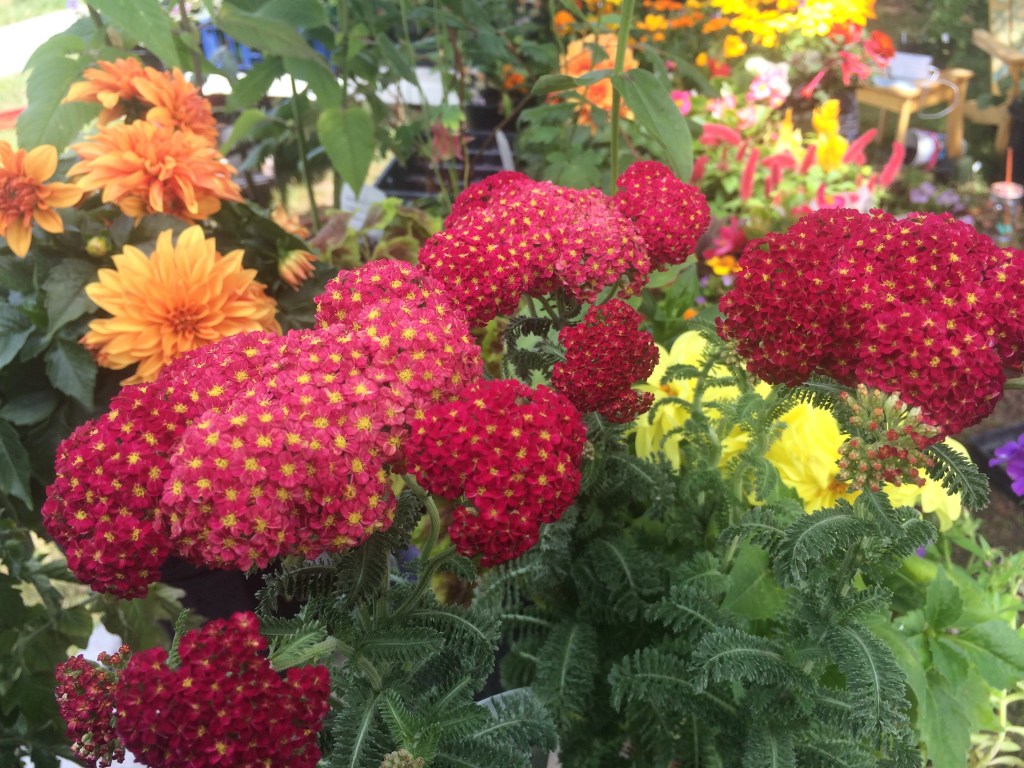
Yarrow– and not just the white stuff! Did you know yarrow comes in many different colors? Mostly pinks, reds, and yellows. Lovely.
Ajuga– Lovely purples of this lovely groundcover. Careful though, mine has managed to get a little out of hand. It is a very prolific plant and that is one of my favorite things about it. Ajuga also comes in different colors, there is the Black Scallop which is dark dark purple, and Burgundy Glow, and likely others. Those are the only two I have in my stock gardens thus far.
Veronica– I don’t know about this one. They leave mine alone, I have the pink potion veronica and it is a favorite. Doesn’t seem to mind being shaded for a full sun plant. But if you want to be on the safe side, you could instead go with the next option. Which gives you the same growth pattern.
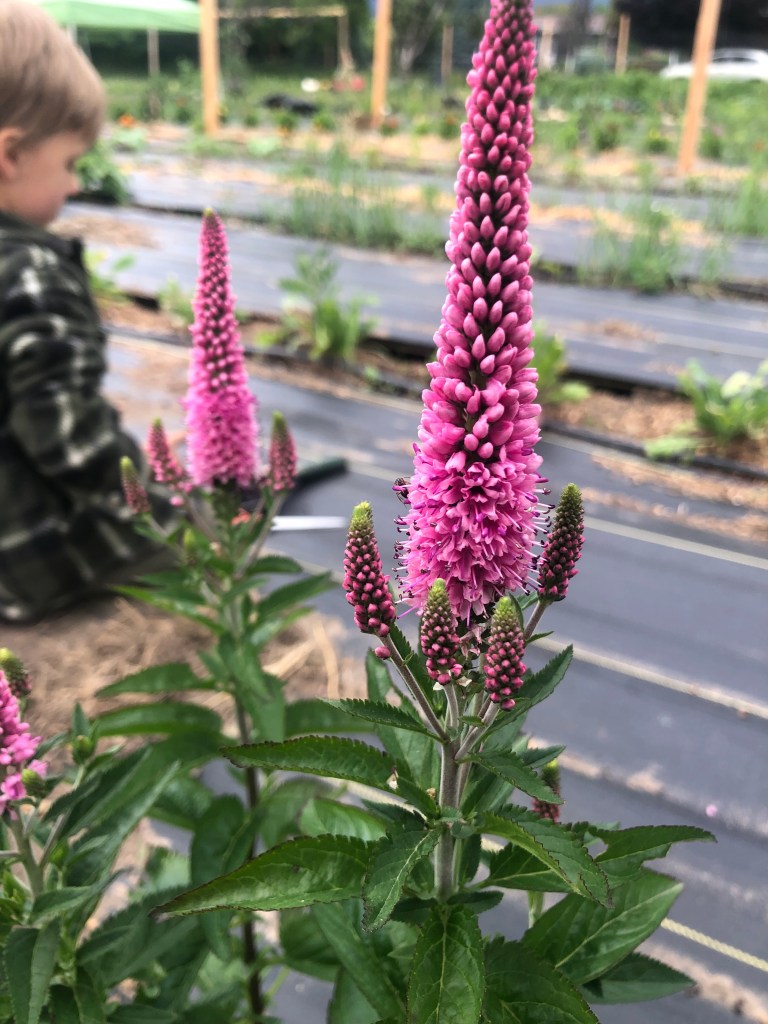
Salvia– This is a great plant and has many recommendations about how much the deer don’t like it all over the internet and in many books.
Snapdragons– Always nice to add some annual blooms for a burst of color. Unfortunately, once temperatures get too hot, the snapdragons will stop blooming, mulching their roots may help delay that.
Lamb’s ear– Fuzzy and fun. I don’t know if mine has ever bloomed where it is, but I don’t really care, because the foliage itself is lovely.
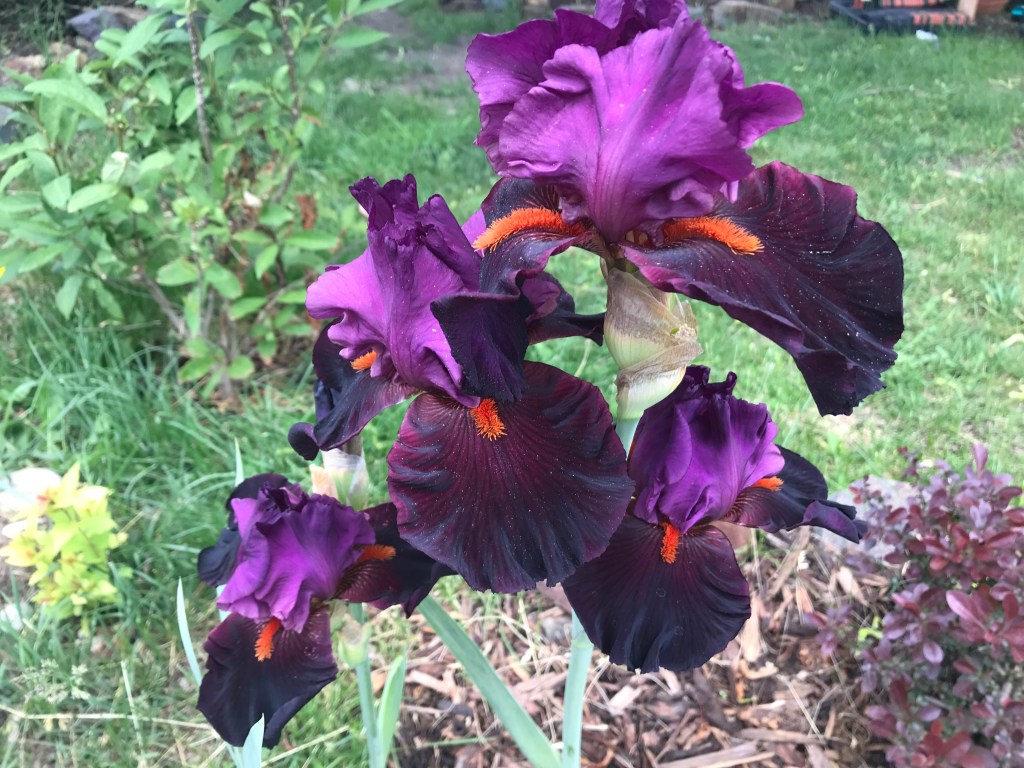
Iris– Although the bloom time of these isn’t forever, that just makes it all the more reason to enjoy them while they last. That’s not to say they are the most shortlived, I have hardy hibiscus in my garden and each flower generally only lasts one day. But the Iris is lovely and comes in many many different colors. I actually ordered a bunch of mine online from a small business that specializes in breeding different iris varieties. The pricing can vary drastically, so just be aware there are beautiful, cost-effective options, but also that an investment of buying one will grant you an overabundance of that beauty over the years as they continue to multiply. The garden- the gift that keeps on giving.
Daffodils– An early bulb. Generally planted the fall beforehand. I have the all yellows, and don’t tell them, but I would really prefer a different variety such as the poet one, or the orange middle with the white outside. I bought mine in bulk though, so can I really be picky? I don’t think so.
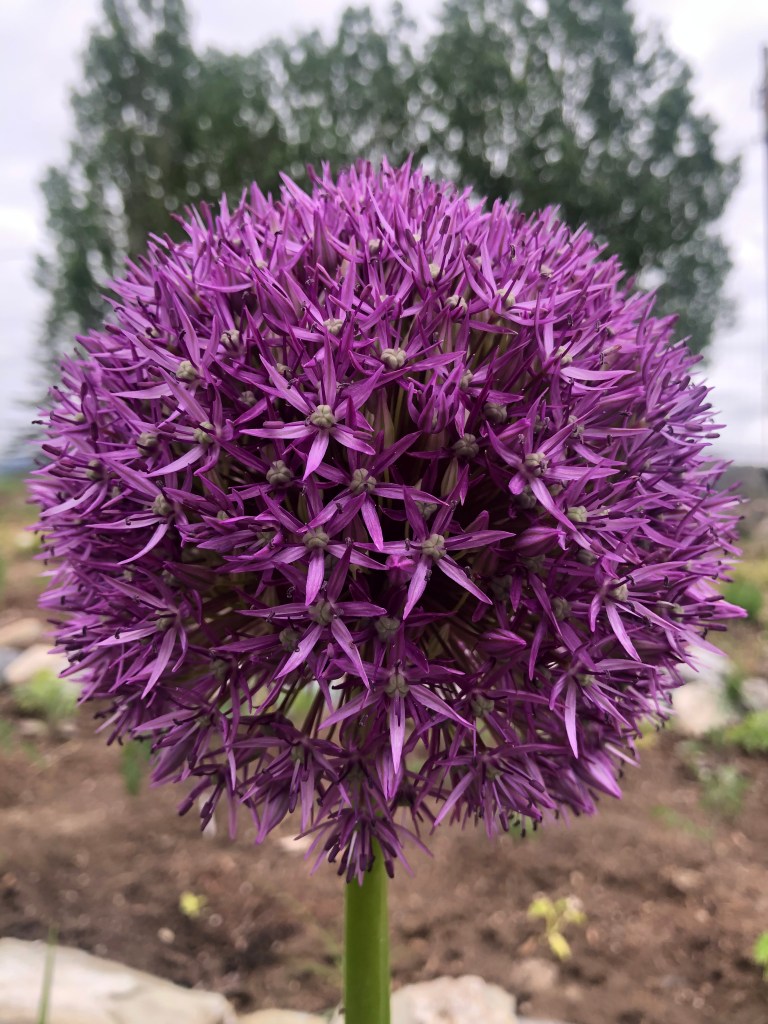
Allium– I have the millenium allium, and every year I look forward to it coming up to create the glorious spheres of blooms that then get completely covered with pollinators. When I had bees, this was their favorite plant, it seemed. I also have one of the giganteum alliums, one huge sphere, I highly recommend them, the bulbs are expensive, but worth it. At the end the head dries up and you can bring it in as decor.

Dusty Miller– An annual. No blooms on this one, but they generally come in six packs and they have intriguing leaf design that brings interest to the eye. I didn’t actually grow these, but that’s okay, I enjoy going to other nurseries, I generally find more than what I was originally looking for.
Lamium– Wonderful plant from the lamiaceae family. Square stemmed. Invasive, but in a ground cover, wow that’s pretty way. Just be sure to cut it back a few times during the season so it doesn’t get leggy or spindly, don’t worry, it won’t even notice. I have two types in my life thus far, Anne Greenaway and…I’m not honestly sure what the other one’s name is. Just your basic lamium. These are also called deadnettles because they look like stinging nettle leaves, but they do NOT sting, thus “dead” nettle.
Herbs– Smelly ones. Like thyme, creeping thyme, lemon thyme, oregano, mint, lavender, oh! I think lavender should have its own area.

Lavender– A few years back I planted a lavender farm. Not really but it seemed like it when I had 50 big plants blooming. Just remember that lavender looks dead for an awful long time. And that you must must remember to give it a good haircut in the fall. And I mean leave only about three or four inches. Otherwise, you may end up with leggy, ugly, unhealthy plants. It’s worth it, I promise. And I’m a lazy gardener. Here’s a picture of my trimmed lavender “farm”. Well, it felt like a farm. I only have the upper two rows and the ones in the lower bed now. Twenty less. This picture was taken the day before Halloween.

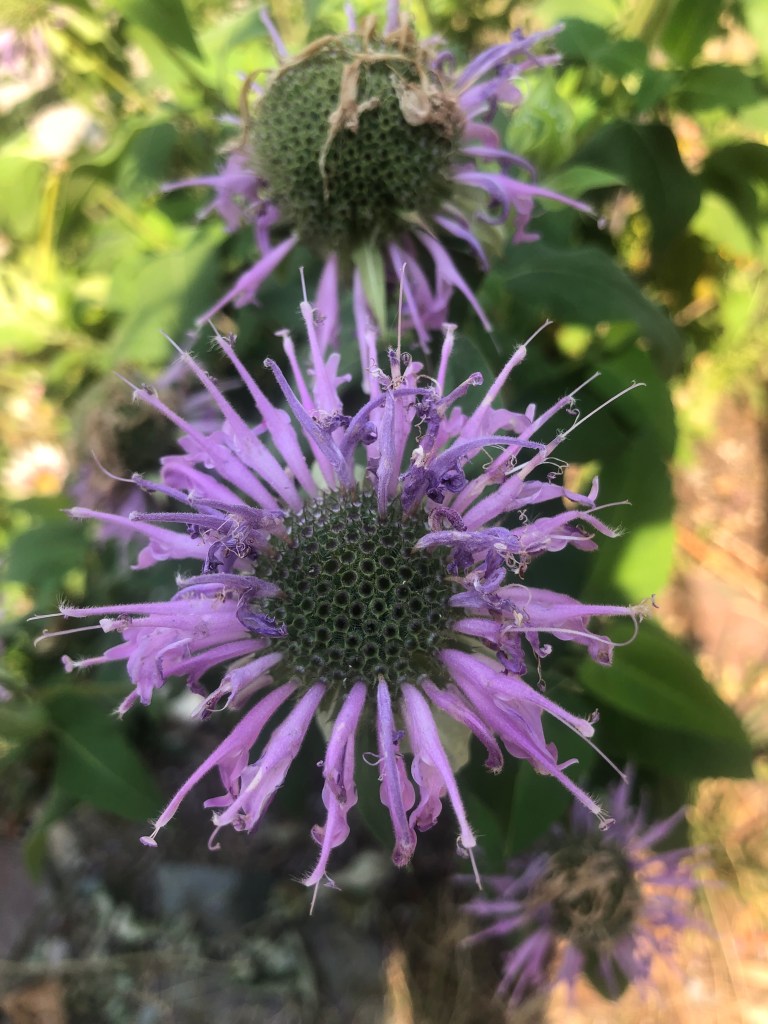
Monarda– I think this one makes the list. I mean, I believe it contains more of the spicy smelly component than oregano itself. Also square stem, so fun! This photo is of my purple bee balm (monarda) but Jacob Cline is a red variety, and there are many others!
 Joy’s Greenhouse
Leave a comment